Moonshot
 Higgsfield
 Orgn
 42dot
 Robocore

Brain-Computer Interfaces Could Take Us Beyond the Physical World
Neural implants are already letting people control computers with thought. The next steps point toward speech, vision, direct internet access, and immersive digital worlds.
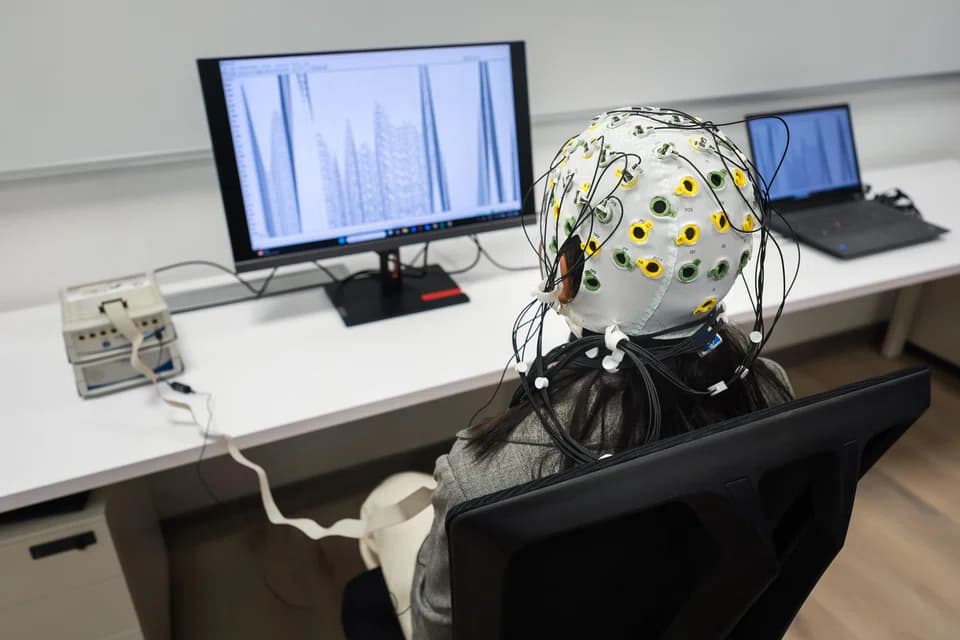
Neuralink’s progress
A person can already use their thoughts to move a computer cursor, play video games, browse the internet, and control robotic equipment. They do this through a brain-computer interface (BCI), a technology that translates neural activity into commands a computer can understand. The systems available today are primarily being developed to help people with paralysis and other neurological conditions, but their potential reaches well beyond medical applications.
Companies such as Neuralink are working toward increasingly capable connections between the human brain and computers. As these systems improve, they could change how people communicate with technology, access information, and experience digital entertainment. Eventually, some people may want a direct connection between their minds and the internet, allowing them to retrieve information without typing or speaking. Others may be interested in receiving visual information through neural implants or spending time in computer-generated environments that feel far more immersive than today’s virtual reality experiences.
The first generation of these technologies is already being tested in people.
Neuralink began human clinical trials in 2024 with its first implant, known as Telepathy. The device uses an array of extremely thin electrode threads inserted into the brain’s motor cortex. These electrodes record neural activity associated with intended movement, and software translates those signals into commands for computers and other devices. A surgical robot performs the implantation because the threads are too fine to be inserted reliably by hand.
The company’s early participants demonstrated that the system could allow people with severe paralysis to control a computer cursor simply by thinking about moving their hand. They have used it to browse websites, play games, communicate, create digital artwork, and perform other computer-based activities. One participant used the system to play competitive video games, while another used it to control a robotic arm.
By early 2026, Neuralink reported that 21 people had received its implants through clinical trials around the world. The company also reported that one participant had reached typing speeds of up to 40 words per minute by imagining individual finger movements. These developments show how a system initially designed for cursor control can support increasingly complex computer interaction.
Neuralink is also working on a speech-decoding system. The goal is to translate neural activity associated with attempted speech into spoken words, allowing people who cannot speak to communicate through a computer-generated voice. The company has discussed a target of 140 words per minute. If achieved, this could make communication through a neural interface considerably faster and more natural than selecting letters or using a cursor.
The company has additional plans for its implant technology. It has discussed increasing the number of electrode channels, improving the surgical process, and developing systems capable of reading and writing more information through the brain. Greater recording capacity could allow future implants to interpret a wider range of neural activity and support more sophisticated applications.
Sending information to the brain
Reading brain activity is only one side of the technology. A more advanced brain-computer interface could also send information into the nervous system through electrical stimulation.
Neuralink’s Blindsight project is an example of this approach. The company is developing a visual prosthesis intended to restore some visual perception to people who are blind. The proposed system uses a camera to collect visual information and an implant to stimulate the brain’s visual cortex. Rather than relying on the eyes and optic nerves, it attempts to deliver visual signals directly to the part of the brain responsible for processing sight.
Neuralink has received FDA Breakthrough Device Designation for Blindsight, and the project represents an important direction for its research. The company has also described a preclinical visual prosthesis experiment involving a blind cat. Human use remains a future stage of development.
The broader significance is that neural stimulation could eventually communicate many kinds of information to the brain. A system that can produce visual perceptions might one day be adapted to present computer-generated images, written information, or other digital content. Someone could potentially receive information without looking at a screen. A person might mentally request directions and receive visual guidance, or access a digital display as part of their own visual experience.
This would require substantial advances in both neural recording and stimulation. The brain processes information through complex patterns of electrical activity, and reproducing a useful visual experience requires more than activating a few points in the visual cortex. Still, research into visual prostheses provides a foundation for investigating how digital information might eventually be delivered through neural interfaces.
Other companies are also working on the communication of information through the nervous system. Researchers at academic institutions have demonstrated that electrical stimulation of sensory regions can produce touch-like sensations. These findings are relevant to the development of bidirectional interfaces, where computers can both interpret neural activity and provide feedback to the user.
A direct connection to the internet
Today’s Neuralink participants can already browse the internet using their thoughts, but they still interact with it through a conventional computer interface. The implant translates intended movements into cursor commands. The person selects icons, opens websites, and reads information on a screen.
A future system could make that process much more direct. Instead of moving a cursor to a search box and typing a question, someone might formulate the question mentally and send it to an AI assistant. The response could then be delivered through audio or, with sufficiently advanced stimulation technology, visual information.
This could change how people use computers. Many routine digital tasks involve translating intentions into physical actions. We type messages, click buttons, scroll through pages, and move between applications. A BCI could reduce the need for those steps by allowing people to communicate their intentions directly to software.
Companies beyond Neuralink are working on the underlying technology. Synchron, for example, developed a brain-computer interface called the Stentrode, which is delivered through blood vessels rather than implanted directly into brain tissue. Participants in its clinical studies have used neural signals to control computers and smart-home devices. Paradromics is developing a high-bandwidth implant designed to record neural activity at a much larger scale, with an initial focus on restoring communication. These approaches differ from Neuralink’s, but they share the goal of translating brain activity into useful digital commands.
As AI assistants become more capable, the potential value of a direct neural interface could increase. People may eventually communicate with AI systems without speaking aloud or using a keyboard. They could request information, manage digital services, control devices, and interact with software through intended thoughts. The internet would still operate through computers and networks, but the human interface could become much less dependent on physical input.
Digital worlds and escapism
Entertainment could become one of the largest areas of interest once brain-computer interfaces become more capable. People already spend significant amounts of time playing video games, watching films, and participating in virtual environments. These technologies offer experiences that differ from ordinary daily life, and more advanced neural interfaces could make those experiences far more immersive.
Consider how someone interacts with a video game today. They use a controller, keyboard, mouse, or motion-tracking system to direct a character. A BCI could eventually allow a person to control movement and actions through thought. They might look around a virtual environment, interact with objects, and communicate with other participants without relying on traditional controllers.
The next development would involve delivering sensory information back to the brain. If neural stimulation could reproduce convincing visual and tactile experiences, digital environments could become much more compelling. Someone might experience the sensation of walking through a forest, swimming underwater, flying through a city, or visiting a place they could never afford to travel to. The experience could become less like watching a screen and more like participating in an environment.
There may also be people who use these systems primarily as a form of escapism. Digital environments could offer activities, social experiences, and settings that are unavailable or difficult to access in their everyday lives. Some might spend a few hours in a virtual world for entertainment. Others could eventually choose to spend much larger portions of their free time in digital environments.
The commercial potential is significant. Gaming companies and entertainment platforms already compete for people’s attention through increasingly sophisticated digital experiences. A future BCI capable of providing direct sensory feedback could create an entirely new category of entertainment. Rather than simply viewing a fictional world, users could experience it through a neural interface.
The next stage of human-computer interaction
Brain-computer interfaces are still in their early stages, but the direction of development points toward much broader uses. Neuralink’s initial work demonstrates that people can control computers through neural activity. Its speech and visual prosthesis projects show that researchers are also working to communicate information back through neural stimulation.
The same basic capabilities could eventually support applications that have little to do with treating paralysis or restoring lost senses. People may want to access the internet directly through their thoughts, communicate with AI systems, control their homes and devices, or receive digital information without using conventional screens. Others may be drawn to immersive entertainment and the ability to spend time in simulated environments.
The transition will depend on improvements in implant technology, neural decoding, stimulation, and the amount of information that can pass between the brain and a computer. But the potential market is much larger than the population that currently needs medical assistance. If these systems become safe, reliable, and convenient, some people may choose them because they offer capabilities that ordinary computers cannot provide.
The smartphone changed how people access information by making the internet available almost anywhere. Brain-computer interfaces could eventually take another step, making digital technology accessible through a much more direct connection to the human mind.
Sources
Published: Oct 16, 2026