Moonshot
 Higgsfield
 Orgn
 42dot
 Robocore

Data Centers Have a Messaging Problem
Data centers keep essential services online, but the public story is stuck on jobs, water, and utility bills. The industry can correct those claims by showing what the buildings do and by paying their own costs.
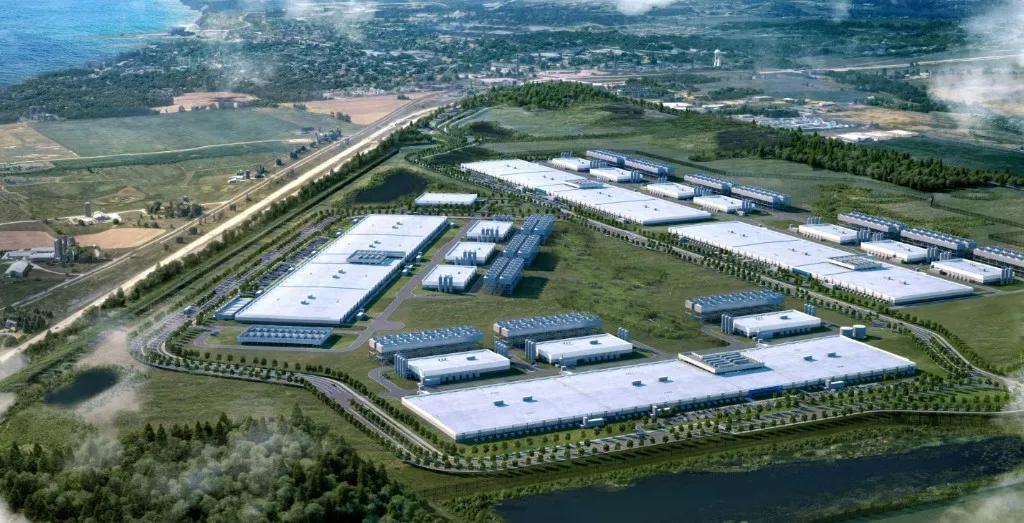
Companies that build and operate data centers are losing an argument they should be able to explain. Town meetings, local news, and social media have settled on a short version of the industry. In that version the buildings create almost no jobs and drain the drinking water. And that household power bills rise so a technology company can train an AI model. Some of this comes from projects that were sold badly or placed badly. The rest comes from treating the building as something other than shared infrastructure.
A data center stores information and runs the computing behind banking, medical records, emergency communications, cloud software, and artificial intelligence. Households rarely see the building. That absence makes it easy to describe the site as a windowless warehouse that benefits someone else. Companies and local officials often reinforce the description when they announce a project. They lead with a jobs number large enough to win a vote. Residents later learn that the lasting payroll is smaller than the announcement suggested. They also learn that water use depends on the cooling design and that the electric bill depends on who pays for new lines and power plants. A useful response explains the benefit and the employment in plain terms. It includes a deal in which the company pays for the power and water it uses so household bills do not rise to cover those costs.
The scale is already large enough that the explanation matters. The International Energy Agency estimates that data centers used about 415 terawatt-hours of electricity in 2024. That was roughly 1.5 percent of electricity use worldwide. Use rose to about 485 terawatt-hours in 2025 after demand increased 17 percent in a year. The agency's central projection has that use roughly doubling by 2030 to around 950 terawatt-hours. That would be about 3 percent of global electricity demand. The United States share is already higher. Lawrence Berkeley National Laboratory found in a 2024 report for the Department of Energy that U.S. data centers used 176 terawatt-hours in 2023. That was 4.4 percent of national electricity consumption. This electricity supports work people already rely on; healthcare, finance, and scientific research. Growth in those areas is a reason to be precise about costs and siting. It is also the benefit that the public conversation keeps skipping.
Jobs, including the ones that end
Companies brought the jobs complaint on themselves. Announcements talk about thousands of jobs. Critics then point out that a finished data center employs a small crew and say the original promise was empty. Both sides are treating a construction project as if it were a factory that should still be full of people on the day it opens.
Construction employment ends when the task ends. Hospitals, schools, bridges, and factories are built the same way. Electricians, ironworkers, and equipment operators are paid while the site needs them. Crews installing cooling and power equipment follow the same pattern and move to the next site when the work is finished. Calling that work "just construction" treats the payroll as fake because it is temporary. A forecast published by the Hamm Institute puts peak direct construction employment at about 0.7 to 2.0 workers per megawatt. Angela Ryu and Shon Hiatt did the underlying work. The range depends on the size and design of the facility. The build itself often runs from a year and a half to about three years. Those jobs last for the construction period. They should not be counted as the permanent staff.
The ongoing staff is smaller. The same forecast puts operations at about 0.15 to 0.35 full-time employees per megawatt once a site is online. The most automated campuses are those above 100 megawatts. They can run with a staff of 20 to 30 per 100 megawatts. A 100-megawatt site at the low end of the construction range would have peaked around 70 tradespeople and then settled near a few dozen operations jobs. That difference is what turns a jobs announcement into a political problem. Residents feel misled when they count badges at the door if the press release used the construction peak. The same thing happens when the announcement folds in indirect jobs at suppliers and restaurants.
A small permanent staff does not mean the building maintains itself. Cooling systems, backup generators, batteries, switchgear, and network equipment need testing, repair, and replacement for as long as the site runs. Some of that work is done by the on-site crew. Contractors return on a schedule for a large share of the rest. Those contractors include electricians, mechanical technicians, controls specialists, and the people who deliver parts. Security and routine upkeep continue alongside that work. Those jobs last longer than the construction peak and employ fewer people than a factory. A hearing should state both parts. The project employs a construction workforce for a defined build, measured by the number of workers at the busiest point. After opening it employs a smaller operations and maintenance group made up of permanent staff and the contractors the equipment requires. Leaving either part out is how the argument goes wrong.
The water claim
The water claim travels even faster than the jobs claim. Proposals get described as if the building will drink the town's supply dry. National numbers do not support that picture. Berkeley Lab estimates that U.S. data centers directly consumed 66 billion liters of water in 2023, about 17 billion gallons. Almost all of it was tied to cooling. The U.S. Geological Survey's last full national accounting was for 2015. It put public-supply withdrawals at 39 billion gallons per day. Public water systems withdrew more in a single day than data centers consumed on site during the entire year of 2023. Direct use that year was on the order of a tenth of one percent of annual public-supply withdrawals. The phrase "all the clean water" does not describe that share. A modest national total has been retold as a local catastrophe at every site.
The cooling design decides whether a specific project resembles that story. Evaporative cooling rejects heat by evaporating water, so those sites consume water on purpose. In a dry region a large evaporative plant can matter to the local utility even when the national total is small. Closed-loop systems recirculate water and need only periodic replacement. Dry cooling rejects heat to the air and can bring on-site water use close to zero, though it uses more electricity. Berkeley Lab's own simulations show site water use varying widely across cooling types, space types, and climates. A town can ask for the expected gallons and the source, and it can ask whether the water is potable. A company can answer with the design rather than a slogan. Newer facilities can often be built so they are not a continuous draw on drinking water. Older evaporative plants are the cases people generalize from, along with new projects that still choose that design in a tight watershed. The correction holds up when that difference is named.
There is a second water number, and it is easy to misuse. Berkeley Lab estimates that the electricity used by U.S. data centers in 2023 carried an indirect water footprint of nearly 800 billion liters, about 211 billion gallons consumed at power plants. The indirect figure is roughly twelve times the water used on site. This is not water the building pumps out of the municipal system. It is the water intensity of the grid that serves the building. The figure changes if the power comes from a contract or from on-site generation rather than from the regional mix the laboratory had to assume. Claims that data centers use no water leave out both figures. Adding the two figures and calling the sum drinking water the town will lose describes two different pipes. On-site use is a design choice the developer controls. Indirect use is mostly an electricity question, and that question is the next part of the offer.
Paying so household bills do not rise
Electricity is where residents have the strongest reason to be wary, and it is where the industry has the clearest benefit to offer. A data center can require new substations, transmission, and generation. Households pay for infrastructure built for a private customer when those costs are spread across everyone who buys power. Analysts have already sketched that risk. A Connecticut legislative review of the research notes projections that data center growth could raise bills in some regions. A Virginia study included in that review found that some residential customers could pay on the order of $14 to $37 more per month by 2040 if the load is served under ordinary cost sharing. That outcome comes from the tariff rather than from an automatic rule.
Utilities and states are already writing a different arrangement. The Edison Electric Institute has reported that 23 states had approved at least one large-load tariff as of May 2026, with others pending. The shared idea is that the customer who causes the cost pays it. Oregon's POWER Act created a separate class for data centers and similar users at 20 megawatts and above. Portland General Electric then moved to raise rates for that class by 29 percent while cutting residential rates by 1.3 percent and commercial rates by 2.2 percent. In Colorado, Xcel Energy has proposed a tariff for customers above 50 megawatts. Those customers would pay for the generation, transmission, and substations built to serve them. The proposal includes long contracts and exit fees so a canceled project does not leave the hardware on everyone else's bill. An Xcel executive said this structure should prevent a rate impact on other customers.
This arrangement is the offer worth making, and it can go further than a promise that residents will not pay the facility's bill. A large customer can cover its own lines, plants, and energy use. If that customer also contributes to the utility's fixed costs, those costs are spread over more sales. Household rates can stay flat under that arrangement. In a case like Portland General Electric's they can fall. Water can follow the same structure. A facility that uses municipal water should pay rates that cover its demand. It should also pay for any treatment or supply built because of that demand. A closed-loop or dry-cooled design that uses little potable water makes the local water effect smaller still. A customer that pays its full share can ease pressure on household water bills when a water utility's fixed costs are shared. A press release that says "lower bills" does not produce that result by itself. The contract has to assign the facility's power, the facility's water, and the related upgrades to the company that wants them.
Industry readers should treat that contract as the message rather than as a footnote under a jobs total. Residents can use a bank, a clinic, and a phone network without connecting those services to a substation proposed beside them. What they notice is the construction crew. They also notice a water figure they do not understand and a line on a utility bill. A project can answer those concerns. It can explain the service and state construction jobs separately from permanent jobs. It can show the cooling design in gallons and agree to pay for its own power and water. A project that promises a factory's worth of permanent jobs will keep confirming the short public version of the story. So will a project that stays vague about water or lets the utility spread the cost of the wires across other customers. That remains true even when the short version is unfair.
A building that pays its bills can still be a poor neighbor. Noise can make it a bad fit. So can a site pressed against houses or evaporative cooling in a dry town. Those issues are planning questions. A better tariff does not answer them, and they do not remove the reason the buildings exist. The work is to stop describing shared infrastructure as a jobs program. It is also to stop letting the worst account of water and rates stand in for every site. Companies should pay for the power and the water. They should say how many people build the facility and how many people run it. They should also explain how the equipment gets maintained after the cranes leave. The public argument gets easier when those statements are already true.
Sources
- IEA — Key Questions on Energy and AI
- Lawrence Berkeley National Laboratory — 2024 U.S. Data Center Energy Usage Report
- U.S. Geological Survey — Water use in the United States
- Hamm Institute — Data Center Employment Forecast
- Connecticut General Assembly — Data Center Energy Impacts
- Large-load tariffs by state — Environment+Energy Leader
- Portland General Electric large-load rates — OPB
- Xcel Energy large-load proposal — Colorado Public Radio
Published: Oct 30, 2026 · Evan Sipplen